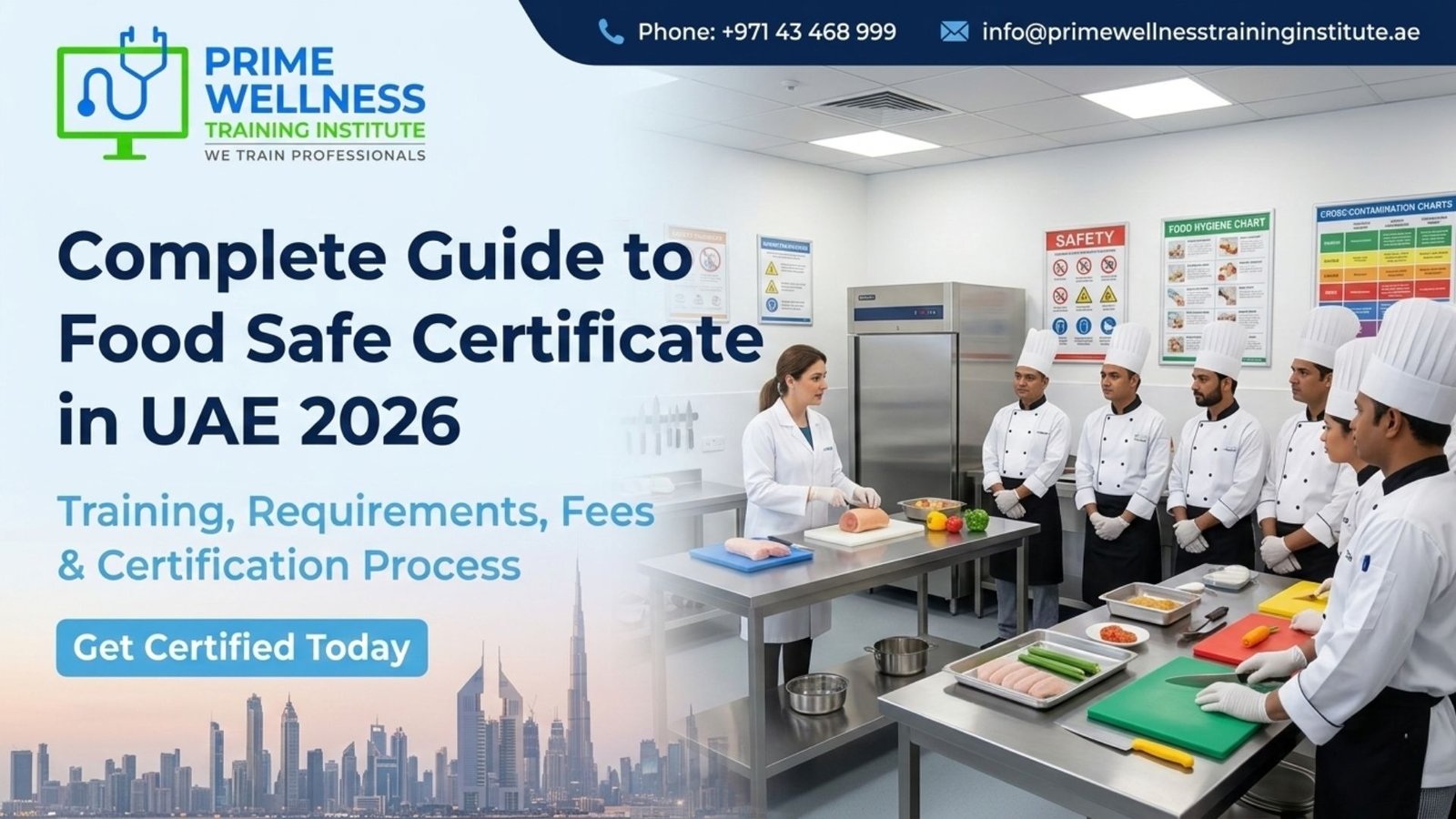
If you work in restaurants, catering, food production, supermarkets, or hospitality, obtaining a food safe certificate is not optional — it is a legal and professional requirement in the UAE.
Food safety regulations in the UAE are strict to protect public health and ensure proper hygiene standards. Whether you are an employee, business owner, or manager, understanding food safety course requirements and food handler certification processes is essential.
This complete 2026 guide explains everything you need to know.
What Is a Food Safe Certificate?
One of the most common questions is:
What is a food safe certificate?
A food safe certificate is an official document issued after completing a certified food safety course. It confirms that a person understands:
- Food hygiene standards
- Safe food handling practices
- Cross-contamination prevention
- Temperature control procedures
- Personal hygiene requirements
- Cleaning and sanitization protocols
In the UAE, food handlers must complete approved food hygiene course training to comply with municipal and health authority regulations.
Without proper certification, businesses can face penalties, fines, or even temporary closure.
Who Needs a Food Safe Certificate in UAE?
Food safety training is mandatory for anyone directly or indirectly handling food, including:
- Restaurant staff
- Kitchen helpers
- Chefs and cooks
- Catering employees
- Food delivery staff
- Supermarket workers
- Food factory employees
Managers and supervisors are often required to complete advanced food handler certification programs to oversee compliance standards.
What Is Included in a Food Safety Course?
A certified food safety course in the UAE typically covers:
1. Basic Food Hygiene Principles
- Personal cleanliness
- Proper handwashing techniques
- Uniform and protective clothing standards
2. Food Contamination & Prevention
- Biological hazards (bacteria, viruses)
- Chemical contamination
- Physical contamination
3. Safe Storage & Temperature Control
- Proper refrigeration practices
- Safe cooking temperatures
- Food labeling guidelines
4. Cleaning & Sanitization
- Equipment cleaning procedures
- Waste management
- Pest control awareness
A professional food hygiene course combines theory with practical examples relevant to restaurants, hotels, and food businesses.
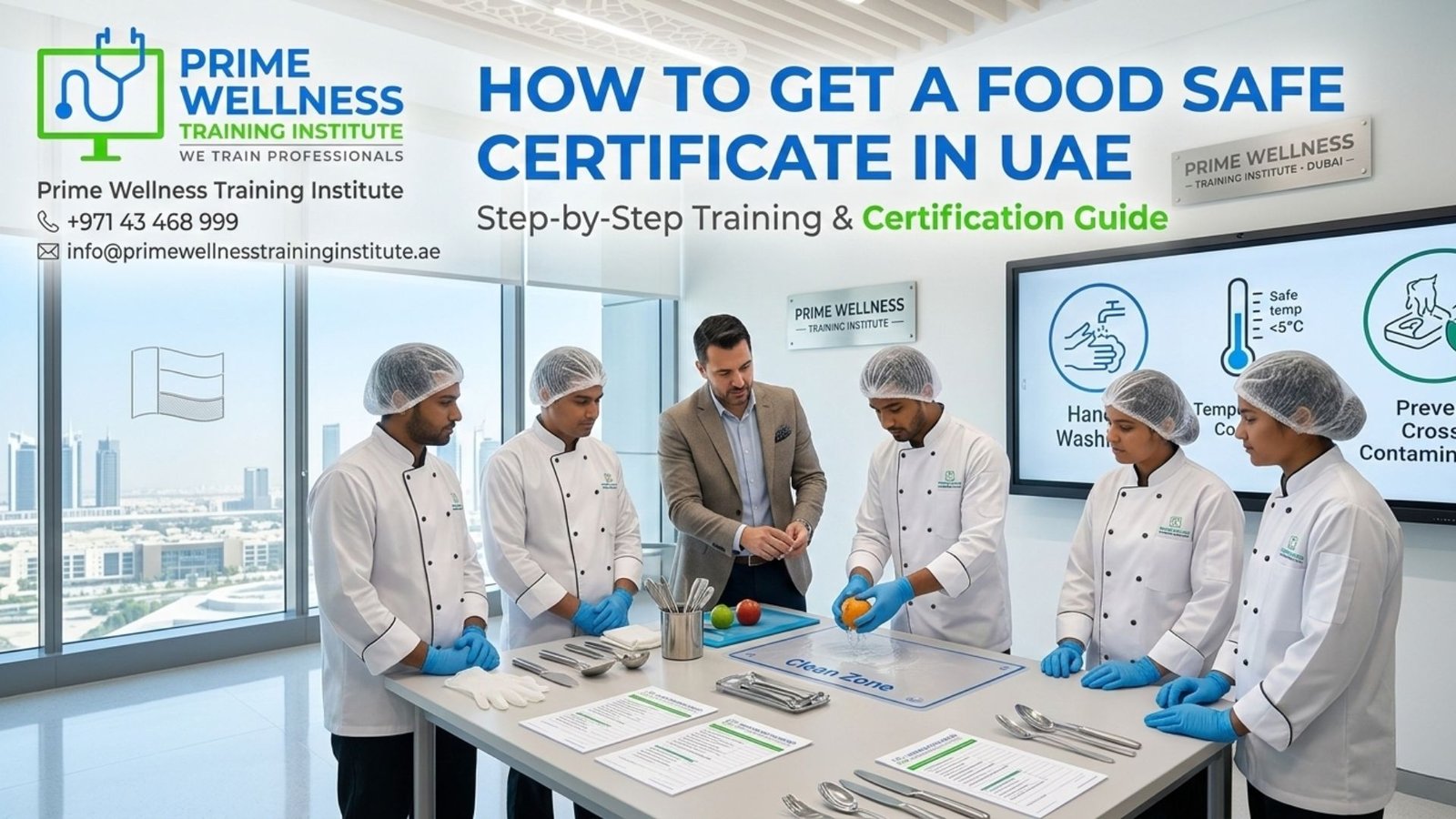
How to Get a Food Safe Certificate in UAE
Getting certified is simple if you follow these steps:
- Enroll in an approved food safety course
- Attend training sessions (classroom or blended learning)
- Complete assessments or exams
- Receive official food handler certification
Training duration typically ranges from:
- 1 day for basic certification
- 2–3 days for advanced supervisory training
Certification validity usually lasts 1 to 3 years, depending on the authority and course level.
How to Renew Food Safety Certification in UAE?
Another important question people ask:
How to renew food safety certification in UAE?
Food safety certificates must be renewed before expiration to remain compliant.
The renewal process usually involves:
- Enrolling in a refresher food safety course
- Updating knowledge on new regulations
- Completing a short assessment
- Receiving updated certification
Renewal ensures employees stay informed about new hygiene standards, updated food safety laws, and improved risk management practices.
Employers are responsible for ensuring their staff certifications remain valid at all times.
Importance of Food Handler Certification for Businesses
For business owners, certified staff means:
- Compliance with UAE municipal regulations
- Reduced risk of foodborne illness outbreaks
- Improved customer trust
- Stronger brand reputation
- Lower risk of fines and inspections penalties
A properly trained team that has completed a recognized food hygiene course ensures smoother inspections and operational stability.
Food Safety Training Levels in UAE
Food safety training programs are generally divided into levels:
Level 1 – Basic Food Handler
For entry-level staff handling food.
Level 2 – Intermediate
For supervisors and team leaders.
Level 3 – Advanced / Management
For managers responsible for implementing food safety systems.
Choosing the correct level depends on your job role and employer requirements.
Benefits of Completing a Food Safety Course
Completing a professional food safety course in Dubai offers multiple benefits:
- Legal compliance
- Career growth in hospitality
- Better job opportunities
- Increased salary potential
- Improved workplace safety
In the competitive UAE hospitality market, having valid food handler certification gives you a professional advantage.
Common Mistakes to Avoid
When applying for a food safe certificate:
- Do not enroll in unapproved training centers
- Always verify certification validity
- Check course accreditation
- Track expiration dates carefully
Ignoring these factors can lead to rejection during inspections.
Final Thoughts
Obtaining a food safe certificate in the UAE is a critical step for anyone working in the food industry. From basic hygiene practices to advanced food handling standards, certified training ensures both compliance and public safety.
Whether you are starting your hospitality career or managing a restaurant, completing a recognized food safety course and maintaining valid food handler certification protects your business, your customers, and your professional reputation.
If your certification is nearing expiration, consider renewing through a trusted food hygiene course provider to stay compliant in 2026 and beyond.