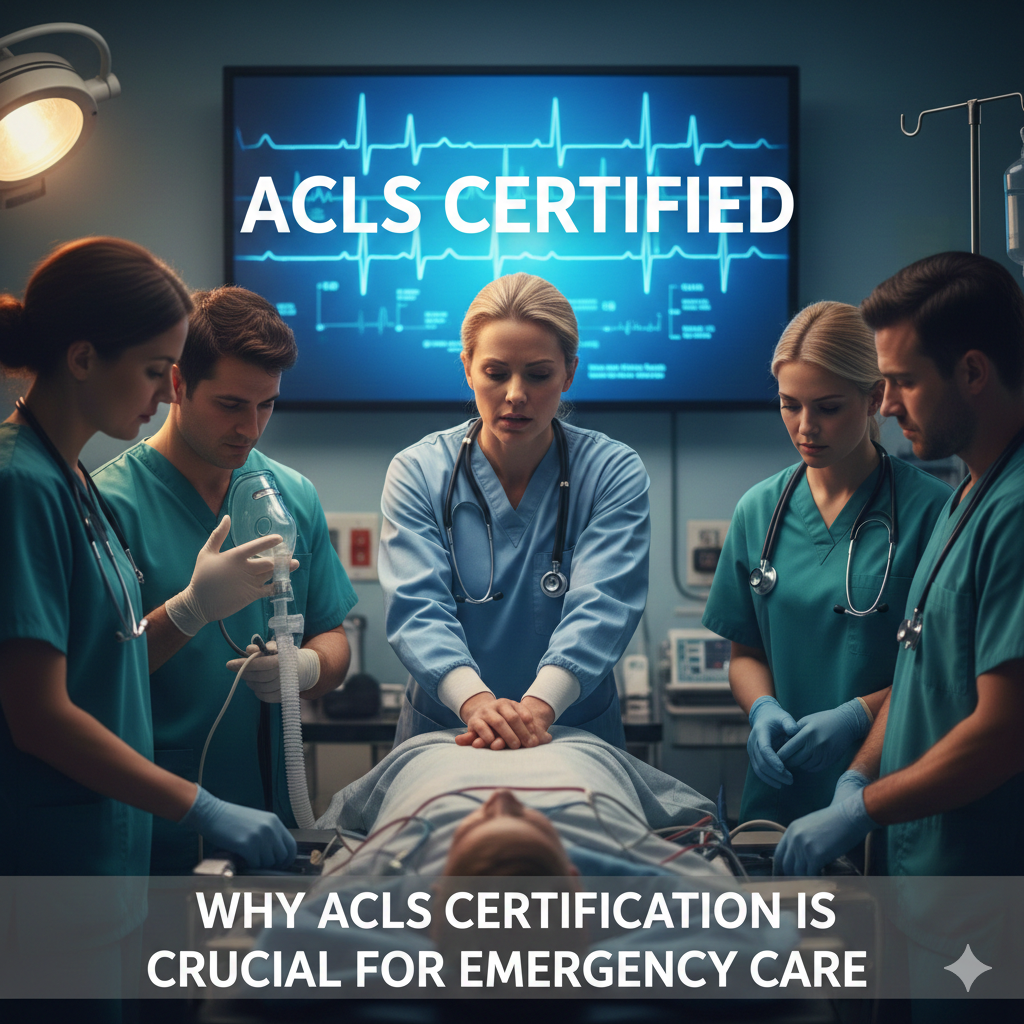
In emergency medicine, every second can determine the difference between life and death. Healthcare professionals working in high-pressure environments must respond quickly, accurately, and confidently to cardiac and respiratory emergencies. This is where Advanced Cardiovascular Life Support (ACLS) becomes essential.
Understanding the ACLS importance in emergency care helps medical professionals recognize why this certification is not just a requirement—but a lifesaving competency that directly improves patient outcomes. Whether you are a nurse, doctor, paramedic, or critical-care technician, ACLS training equips you with the clinical decision-making skills needed during the most critical moments of patient care.
What Is ACLS and Why It Matters in Emergency Medicine?
Advanced Cardiovascular Life Support (ACLS) is a structured set of clinical guidelines and interventions designed to manage:
- Cardiac arrest
- Stroke
- Acute coronary syndromes
- Life-threatening arrhythmias
- Respiratory failure
Unlike Basic Life Support (BLS), ACLS involves advanced airway management, ECG rhythm interpretation, IV medication administration, and team-based resuscitation leadership.
Because emergency departments and intensive care units frequently encounter these situations, the ACLS importance in emergency care cannot be overstated. Proper ACLS training ensures healthcare providers act systematically rather than reactively, improving survival chances for critically ill patients.
How ACLS Training Improves Patient Survival Rates
One of the most significant ACLS certification benefits is its direct impact on patient survival and recovery.
ACLS-trained professionals are able to:
- Recognize cardiac arrest rhythms within seconds
- Deliver immediate, guideline-based treatment
- Coordinate effectively with resuscitation teams
- Prevent complications through early intervention
Research in emergency medicine consistently shows that standardized resuscitation protocols—like those taught in ACLS—lead to better neurological outcomes and higher survival rates.
This makes ACLS certification not only valuable for careers but vital for saving lives.
Essential Skills You Gain Through ACLS Certification
To fully understand the ACLS importance in emergency care, it’s important to look at the practical skills covered in training.
1. Advanced Cardiac Rhythm Recognition
Healthcare providers learn to interpret ECG rhythms such as ventricular fibrillation, pulseless ventricular tachycardia, asystole, and pulseless electrical activity—allowing rapid, accurate treatment decisions.
2. Emergency Medication Administration
ACLS teaches drug selection, dosage, and timing during cardiac emergencies, ensuring medications like epinephrine or amiodarone are used effectively.
3. Airway and Ventilation Management
Providers gain hands-on experience with advanced airway devices, oxygen delivery systems, and ventilation techniques, which are critical during respiratory failure.
4. Team Leadership and Communication
Modern resuscitation depends on clear communication and defined leadership roles. ACLS training strengthens teamwork, reducing errors during high-stress emergencies.
These real-world competencies highlight the true ACLS certification benefits beyond simply holding a certificate.
Who Needs ACLS Certification the Most?
While many healthcare professionals benefit from ACLS, it is especially crucial for those working in:
- Emergency departments
- Intensive care units (ICUs)
- Cardiac care units
- Operating rooms
- Ambulance and pre-hospital emergency services
Hospitals often require ACLS certification for employment or promotion in these departments.
Because of this, understanding the ACLS importance in emergency care is also key to career advancement in critical-care medicine.
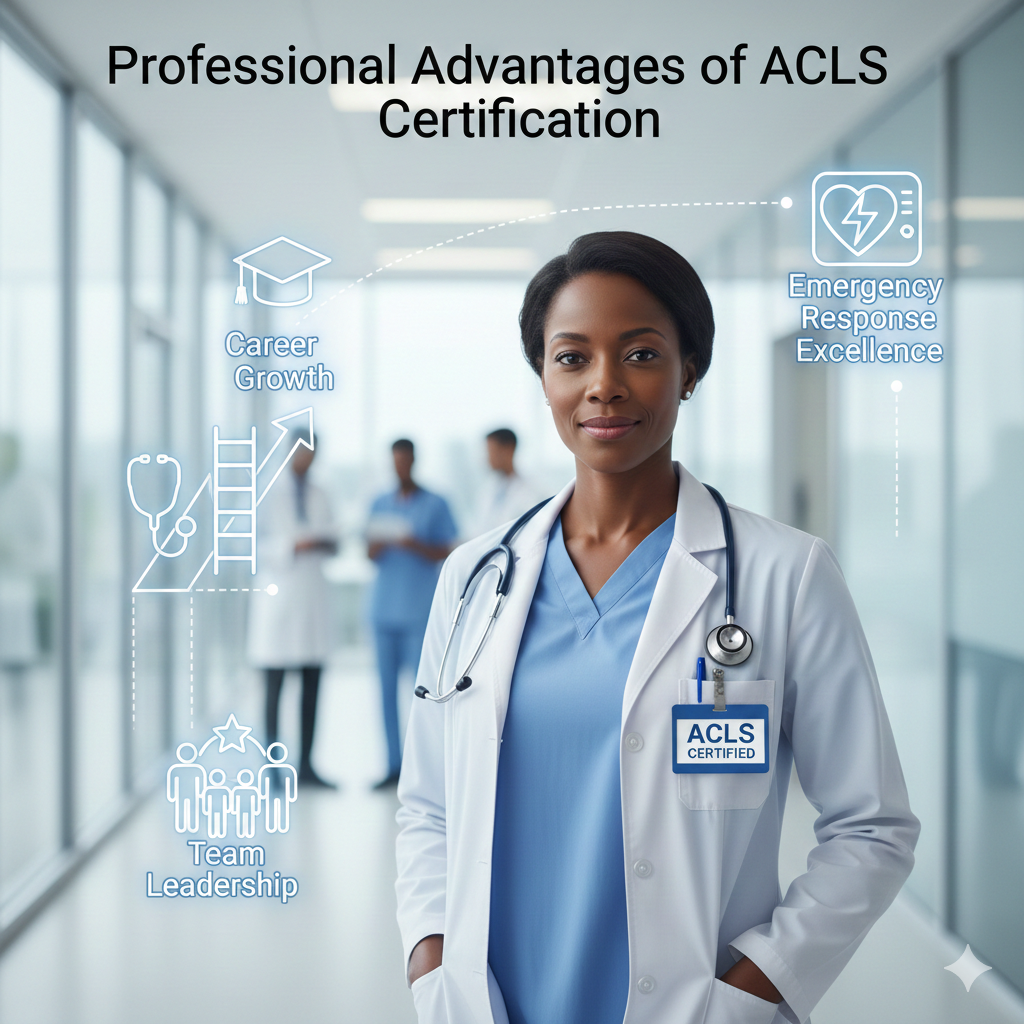
Professional Advantages of ACLS Certification
Beyond clinical impact, there are strong career-related ACLS certification benefits.
Increased Employability
Certified professionals are preferred by hospitals and healthcare organizations, as ACLS proves readiness for high-risk patient care.
Higher Salary Potential
Advanced certifications often lead to better-paying roles, especially in ICU, ER, and specialty units.
Global Recognition
ACLS programs based on international guidelines are accepted worldwide, supporting career mobility across countries.
Confidence in Critical Situations
Perhaps the most valuable benefit is clinical confidence—the ability to stay calm and act correctly when lives are at stake.
ACLS Certification and Quality of Emergency Healthcare Systems
Healthcare systems aim to deliver safe, standardized, and high-quality emergency care.
Widespread ACLS training among providers helps achieve:
- Faster emergency response times
- Reduced medical errors
- Consistent treatment protocols
- Improved patient survival statistics
This system-wide improvement further proves the ACLS importance in emergency care—not only for individuals but for entire healthcare organizations.
How Often Should ACLS Certification Be Renewed?
ACLS certification is typically valid for two years, after which professionals must complete recertification training.
Regular renewal ensures providers stay updated with:
- Latest resuscitation science
- Updated treatment algorithms
- New emergency medications or protocols
Continuous learning is a key reason why ACLS Certification benefits extend throughout a healthcare professional’s career.
The Future of Emergency Care and ACLS in 2026 and Beyond
As medical technology advances and patient expectations rise, emergency response standards continue to evolve.
Future trends include:
- Simulation-based resuscitation training
- AI-assisted cardiac monitoring
- Improved post-cardiac-arrest care protocols
- Greater emphasis on team-based emergency response
In this evolving landscape, ACLS certification will remain a core requirement for high-quality emergency medicine worldwide.
Final Thoughts
The ACLS importance in emergency care goes far beyond meeting job requirements. It represents:
- The ability to save lives during cardiac emergencies
- Mastery of advanced clinical decision-making
- Professional credibility in critical-care environments
- Continuous growth in emergency medical expertise
These powerful ACLS certification benefits make ACLS one of the most valuable qualifications any healthcare professional can achieve.
For those committed to excellence in patient care, obtaining and maintaining ACLS certification is not optional—it is essential for delivering safe, effective, and life-saving emergency treatment.