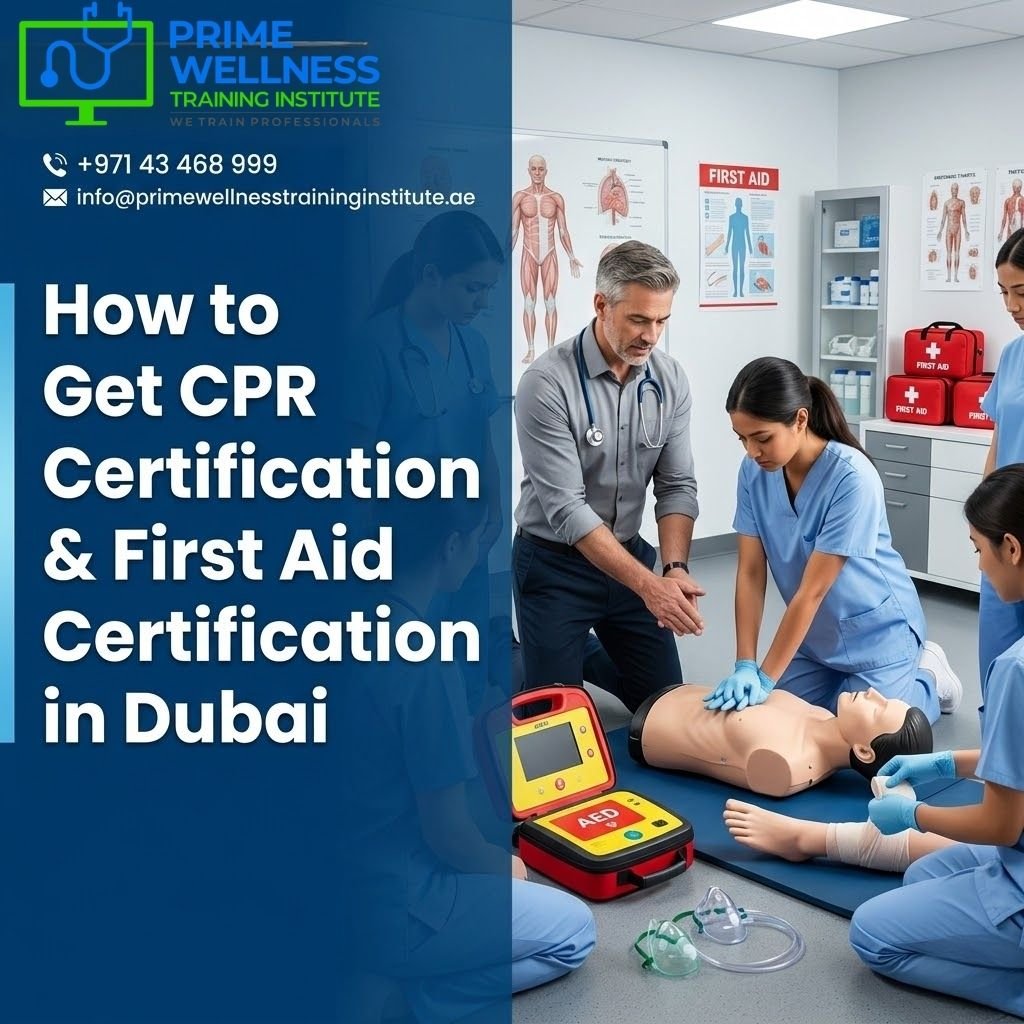
If you are looking to save lives and boost your healthcare career, obtaining CPR certification and first aid certification in Dubai is essential. These certifications are recognized globally, enhance your employability, and equip you with life-saving skills.
Whether you are a healthcare professional, teacher, caregiver, or safety officer, completing a first aid course Dubai ensures you are prepared for emergencies in workplaces, schools, and public spaces.
This guide will take you step-by-step through the process of getting certified, including training options, course duration, costs, and what to expect during your first aid training.
Step 1: Choose the Right Training Provider
When selecting a provider for CPR and first aid certification, consider:
- Accreditation and recognition (e.g., American Heart Association, Red Cross)
- Experienced instructors with practical expertise
- Hands-on training with manikins and emergency simulations
- Flexible course schedules (online, weekend, or evening sessions)
Opting for a reputable first aid course Dubai provider ensures your certification is valid and recognized by employers in the UAE.
Step 2: Understand the Different Certifications
It’s important to know the distinction between CPR certification and first aid certification:
Certification | Focus | Who Needs It | Duration |
CPR Certification | Cardiopulmonary resuscitation for adults, children, and infants | Healthcare professionals, teachers, lifeguards | 2-4 hours |
First Aid Certification | General emergency response, wound care, burns, choking, fractures | All individuals in workplaces, schools, or caregiving roles | 4-8 hours |
Many institutes combine both into a single CPR first aid certification course for comprehensive training.
Step 3: Enroll in the Course
Most first aid training Dubai programs allow you to enroll online or in-person. During registration, you will:
- Choose your course type (CPR only or combined first aid + CPR)
- Select your preferred schedule
Submit identification and any prerequisites (if required)
Step 4: Attend Practical & Theoretical Training
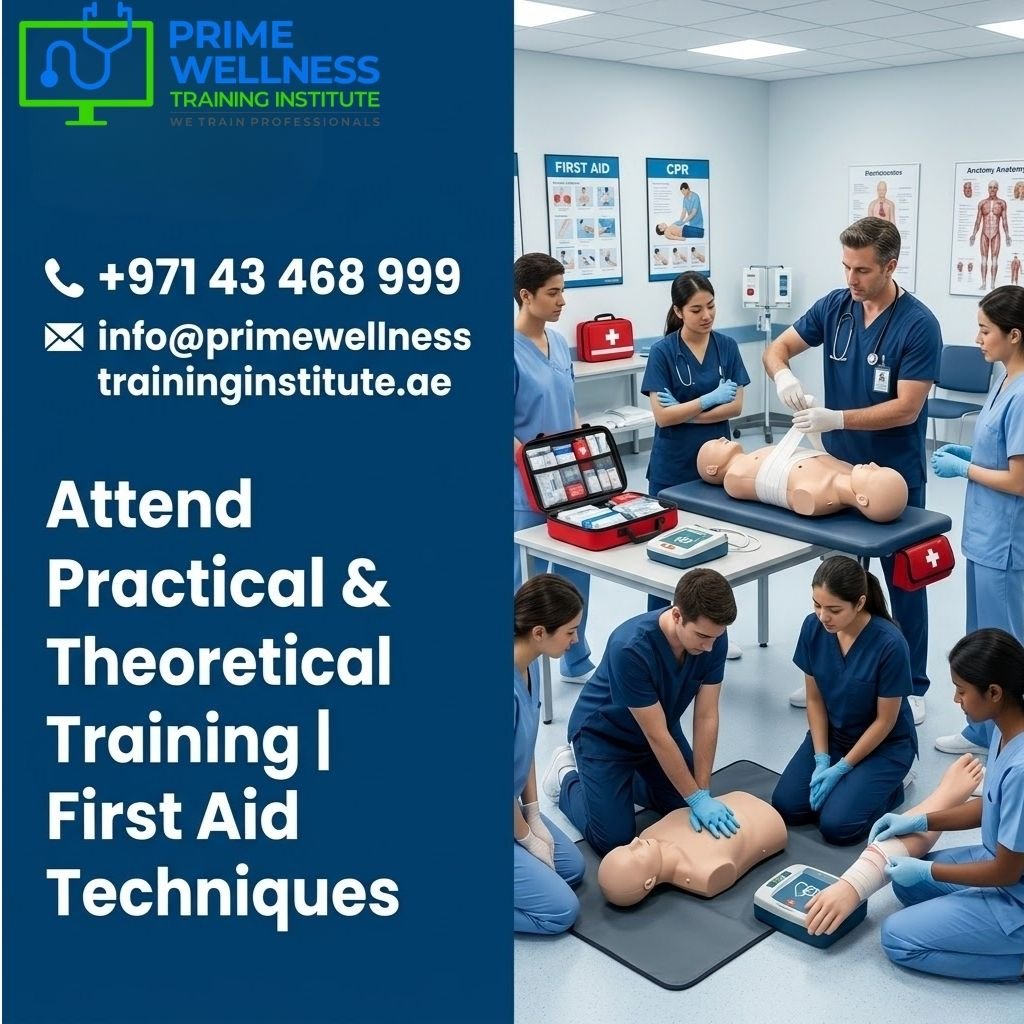
Your course will include:
- Hands-on CPR practice on adult, child, and infant manikins
- First aid techniques such as bandaging, wound care, and splinting
- Emergency response protocols including choking relief and AED use
- Assessment to ensure competency
This practical training ensures you can respond confidently in real emergencies.
Step 5: Complete Assessment & Receive Certification
At the end of the course, you will typically undergo a short practical and theoretical assessment. Upon successful completion:
- You will receive a CPR certification card
- If enrolled in a combined course, you will also get a first aid certification
- Certifications are valid for 2 years and can be renewed through refresher courses
Step 6: Online Options for CPR and First Aid Training
Some accredited providers in Dubai offer online CPR certification and first aid training modules for theory learning. The practical component is completed in-person to ensure skill competency.
This hybrid approach is ideal for:
- Working professionals with tight schedules
- Individuals preferring flexible learning
Those seeking fast-track certification
Step 7: Renewal and Recertification
CPR and first aid certifications are usually valid for 2 years. Renewal involves:
- Attending a refresher course
- Completing updated protocols per American Heart Association (AHA) or Red Cross guidelines
- Reassessment to confirm skills
Regular renewal ensures your knowledge remains current with the latest emergency care practices.
Why Getting CPR & First Aid Certification in Dubai Matters
- Saves Lives: Be prepared to respond effectively in emergencies.
- Career Advantage: Essential for nurses, teachers, caregivers, and safety officers.
- Compliance: Many workplaces in Dubai require certified staff.
- Confidence: Gain the skills and confidence to handle medical emergencies.
Completing a first aid course Dubai along with CPR certification not only meets regulatory requirements but also builds a safer community and workplace.
Why Getting CPR & First Aid Certification in Dubai Matters
- Saves Lives: Be prepared to respond effectively in emergencies.
- Career Advantage: Essential for nurses, teachers, caregivers, and safety officers.
- Compliance: Many workplaces in Dubai require certified staff.
- Confidence: Gain the skills and confidence to handle medical emergencies.
Completing a first aid course in Dubai along with CPR certification not only meets regulatory requirements but also builds a safer community and workplace.